


Technical Talks
This year, as a novelty at SAAEI, the technical talks by collaborators will run in parallel with the conference technical sessions.
Wednesday - July 8th
📍 Barlovento Room | 🕒 17:30 - 19:00
Thursday - July 9th
📍 Barlovento Room | 🕒 17:30 - 19:00
Friday - July 10th
📍 Barlovento Room | 🕒 11:30 - 12:30
Information about the technical talks:
Mitigation of Instabilities in Grid-Connected Converter Tests
📍 Barlovento Room | 🗓️ Wednesday, July 8th 🕒 17:30

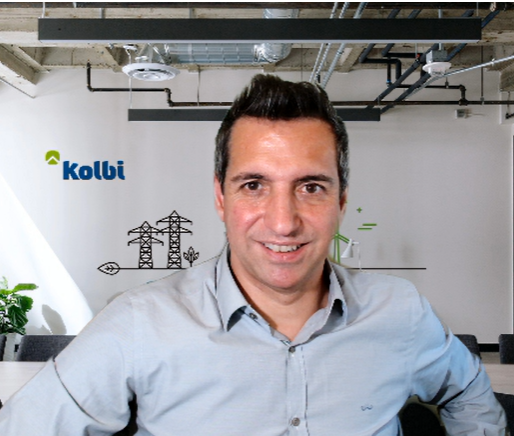
Julian Moreno 
Julian Moreno is responsible for the ATE equipment segment at Kolbi. He holds a degree in Industrial Engineering from Universidad Carlos III. With an extensive professional background in developments within the framework of electrical power generation, both conventional and renewable solar, his career in recent years focuses on power test and measurement equipment for R&D in the aerospace, automotive, railway, energy, and general science and research sectors. He has wide experience in switched energy conversion system technologies and battery and fuel cell / H2-based storage.
The requirements imposed by EU Grid Codes on inverters, converters, and interconnection systems in distributed energy resource (DER) systems are becoming increasingly stringent. The need for synchronization generation is paramount. Converter tests during the design and validation phases are becoming increasingly complex, demanding more resources and requiring more sophisticated, power-scaled test systems.
In this context, the appearance of unexpected instabilities and resonances in the power flow during test execution can be a major headache in the laboratory. Understanding factors such as impedance coupling and the interaction between control loops of the test systems and the DUT, as well as the control loop parameters of the equipment, are key to mitigating these issues.
This technical talk explains the main factors causing these instabilities, how they can appear in different types and topologies of tests, and mitigation strategies.
Instrumentation for the Development and Validation of Electronic Systems: Challenges and Opportunities in the Era of AI
📍 Barlovento Room | 🗓️ Wednesday, July 8th 🕒 18:00

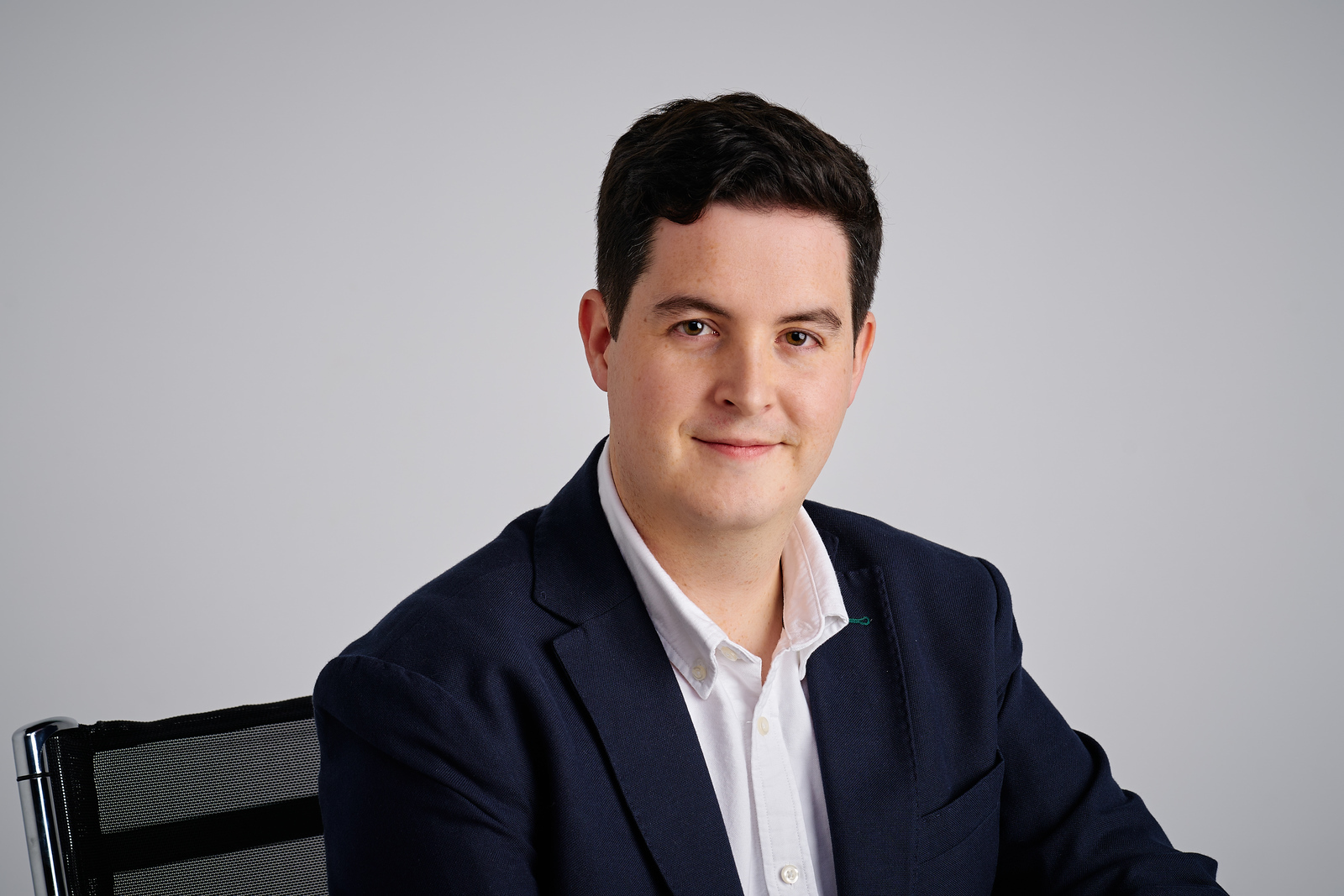
Daniel Puentes
Daniel Puentes is the Sales Director at Datatec Instruments. An Industrial Engineer from Universidad Politécnica de Madrid (UPM), he has more than 12 years of experience in the electronic test and measurement instrumentation sector. Throughout his career, he has worked closely with research centers, universities, and industrial companies on projects related to radio frequency, electromagnetic compatibility (EMC), power electronics, and electronic device characterization.
His experience, combined with knowledge of a broad portfolio of leading instrumentation manufacturers, allows him to help engineers select and apply the most appropriate measurement solutions for their development, testing, and validation challenges.
The growing complexity of today's electronic systems, driven by the adoption of wide-bandgap semiconductors (SiC and GaN), the electrification of multiple industrial sectors, and the digitalization of development processes, poses new challenges in the design, validation, and certification stages.
This presentation offers a practical overview of the most relevant trends in electronic instrumentation applied to the development of power converters, high-speed electronic systems, and advanced industrial applications. The main challenges associated with the characterization of SiC and GaN devices will be addressed, including high-speed signal measurement, dynamic switching losses, parasitic phenomena, and power integrity.
Likewise, the role of EMC pre-compliance techniques will be analyzed as a tool to reduce risks and costs during the design process, demonstrating measurement strategies that allow identifying and correcting emissions and immunity problems before the final certification phase. Finally, it will explore how artificial intelligence (AI) is starting to be integrated into modern instrumentation to accelerate the interpretation of results, automate measurement processes, and assist the engineer in complex diagnostic and characterization tasks. The presentation will combine technical fundamentals with practical examples of instrumentation selection and real application cases, providing a current view of how intelligent instrumentation is transforming the development of future electronic systems. During SAAEI 2026, Datatec will offer live demonstrations of new instruments from Keysight, Tektronix, Keithley, Elektro Automatik, Siglent, emiGo, or PicoTech, among others.
Precise Efficiency Measurement on Power Electronics – From Single to Multiphase Applications
📍 Barlovento Room | 🗓️ Thursday, July 9th 🕒 17:30

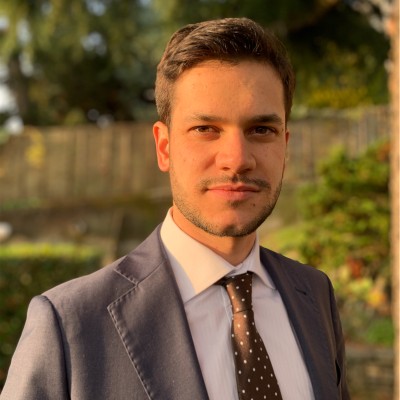
Federico Unnia
Federico Unnia is Sales Specialist for Power Electronics in South Europe. Before joining Rohde & Schwarz, he was Manager of Applications Engineering at Efficient Power Conversion (EPC). He received his BS in 2018 and MS in 2021 in Electronic Engineering at Politecnico di Torino. He did his master's thesis in power electronics in collaboration with the Power Electronics Laboratory at University of California Irvine.
This presentation explains why precise efficiency verification is essential in modern power electronics and how measurement uncertainty can obscure genuine design improvements. At today’s converter efficiencies (typically 98–99.5%), optimization steps of only 0.1–0.3% require instruments and methods with uncertainty well below the targeted gain. The talk highlights key challenges—high-frequency switching with SiC/GaN, tight voltage-current time alignment, low power factor sensitivity to phase error, distorted PWM waveforms with harmonics, and synchronization demands in multiphase systems (including correct star/delta handling). It argues that dedicated precision power analyzers provide continuous, cycle-synchronized sampling, wide bandwidth, high accuracy, and multi-channel grouping capabilities that oscilloscopes and multimeters cannot match for repeatable efficiency testing. Application examples span EV drivetrains, solar inverters, data-center server PSUs and 80 PLUS certification, solid-state transformers, conventional transformers, and UPS systems, concluding with wiring and configuration best practices to avoid systematic errors.
Impact of AI Server Loads on the Design of Uninterruptible Power Supply Systems in Large Data Centers.
📍 Barlovento Room | 🗓️ Thursday, July 9th 🕒 18:30

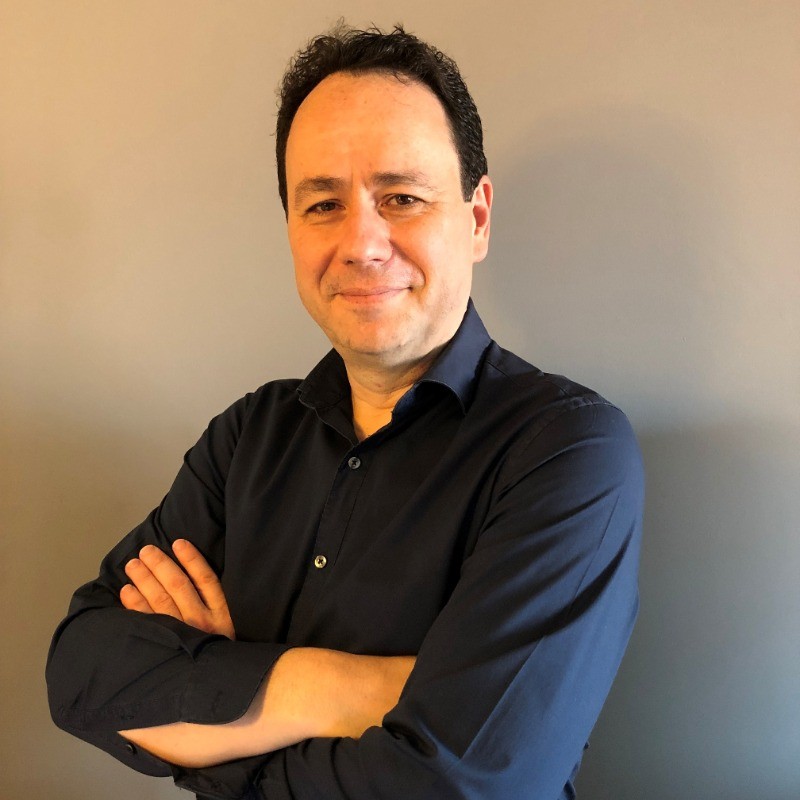
Julian Manso
Julian Manso is the R&D Director of Services and Global Services Platform at Vertiv, forming part of the global services organization reporting to the CTO. Julian started his professional career at Alcatel and Ericsson in 1994 as part of the power systems engineering groups, and in 1999 he joined the Auna-Orange group as an infrastructure solutions expert. In 2005 he joined Emerson Network Power as the Local Technical Support Leader in Spain. During 2013 he was promoted to Technical Support Director of Services in EMEA, including remote service centers. As of 2022, Julian is in charge of the global engineering group, responsible for developing the tools used by Vertiv customer engineers worldwide, as well as the monitoring applications that Vertiv uses on-premises or in the cloud to support our digital services. In addition, he leads a group of data scientists who are developing AI and ML-based condition monitoring maintenance algorithms to optimize our maintenance procedures.
State Machine-Based Transition Control and Scenario Validation in Industrial Hybrid Microgrids
📍 Barlovento Room | 🗓️ Friday, July 10th 🕒 11:30

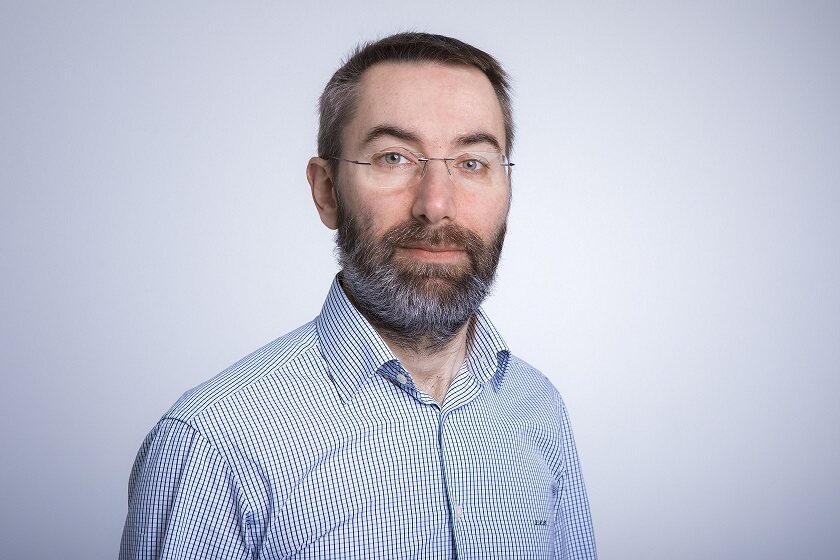
Luis López
Luis López is an Application Engineer at MathWorks, specializing in the areas of physical systems and process simulation, control system design, and the verification and implementation of those systems. His background is in industrial engineering, specializing in mechanics. Prior to joining MathWorks, his professional career developed within companies and projects in the railway sector.
Hybrid microgrids, composed of distributed energy resources such as renewable generation, storage, and conventional generators, require robust control strategies to ensure safe and reliable operation across different operating modes. In particular, transitions between modes—such as switching to islanded operation, resynchronizing with the main grid, or black starting—constitute critical situations where system performance fundamentally depends on the control design.
This presentation details a state machine-based approach for transition control design, which formalizes the behavior of the microgrid controller by explicitly defining states and operating sequences. This approach reduces ambiguity in control implementation and facilitates the development of coherent strategies for different operating scenarios, aligned with standards such as IEEE 2030.7.
Additionally, the systematic validation of the microgrid through simulation is addressed, using detailed models within physical modeling environments. Scenario verification strategies are presented to evaluate the controller's behavior against both planned and unplanned conditions, including faults, disturbances, and topology changes. This process makes it possible to verify compliance with grid requirements and codes, as well as to guarantee the stability of key variables such as voltage, frequency, and power during transitions.
The results demonstrate how the combination of state machine-based design and automated scenario validation significantly contributes to enhancing the robustness, safety, and resilience of industrial microgrids, providing a systematic methodology from design through to implementation.